Fall Leaves: Mulch Them Into the Lawn or Rake Them?
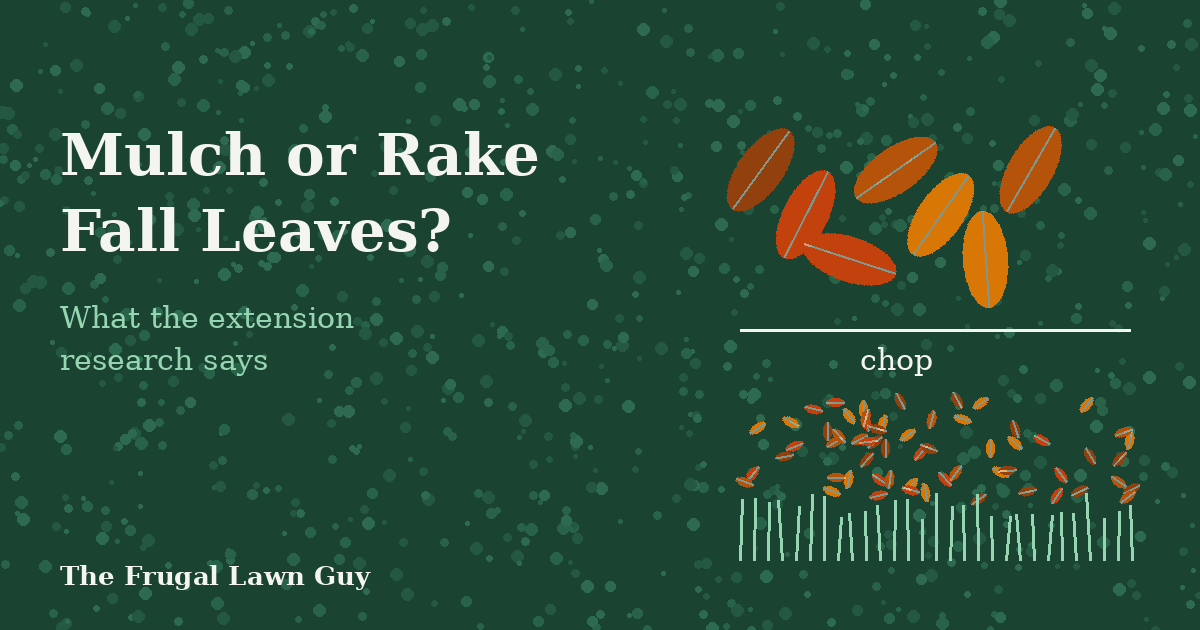
For most lawns, mulch the leaves. Chop them with the mower you already own, keep the layer thin enough that you can still see grass afterward, and stop worrying about the rake. Extension trials found up to 6 inches of leaves can be mulched in at a time with no harm to the turf, and the chopped leaves feed the lawn. The exceptions are pine needles, a leaf mat you can’t chop down, and a warm-season lawn that needs the leaves off before spring green-up.
What to buy: usually nothing · a sharp blade is the one upgrade, like the Arnold Universal Xtreme 3-in-1 blade (~$23.10 at Home Depot). All picks.
Every October the same argument starts: rake them, blow them, bag them, or just mow over them. I’d rather skip the argument and look at what the university trials found. Most of the money and weekends people spend on leaves buy nothing the mower can’t do for free.
Jump to the quick answer. The fall guide for warm-season and cool-season lawns lays out what each lawn type needs this month.
What the Research Found
Virginia Cooperative Extension sums up the trial record this way: in almost every instance, chopping deciduous leaves as part of a regular mowing schedule manages them without harming the turf. A Purdue study put up to 4,000 pounds of maple leaves per acre on a perennial ryegrass lawn in one application. Turf quality, color, growth, thatch, soil pH, weeds, and disease pressure showed no undesirable effects.
Michigan State took it further. Their work indicates up to 6 inches of leaves can be mulched into established turf at one time. A follow-up trial in HortTechnology found mulched maple and oak leaves, at the high rate, cut common dandelion counts by up to 80 percent after one application and 53 percent after a second, and spring green-up improved. The proposed reason is simple. Leaf fragments fill the thin spots where weed seed would otherwise germinate.
There’s a fertilizer angle too. UConn estimates that mulching a 2-inch layer of leaves into the canopy over a fall season returns roughly 150 pounds of nitrogen per acre, which works out to about 3.4 pounds of nitrogen per 1,000 square feet. That does not replace a real fertilizer program (the Purdue work says the same), but on a mature lawn UConn says the fall rate can be trimmed. Our cool-season fall fertilization guide covers what the one pass that matters looks like.
UConn also reports that mulched leaves add organic matter at the soil surface but do not build thatch.
The Rules That Make It Work
The research comes with conditions, and ignoring them is how mulching goes wrong.
- You should still see grass. UConn’s guidance is that no more than about 20 percent of the lawn should be covered by leaf fragments after each pass. If you mow and the lawn still looks like a leaf pile, make another pass or come back sooner.
- Mow more often. UConn says fall mowing may need to be more frequent than usual. Keep to the normal height and never remove more than a third of the blade.
- Mow dry. VCE notes wet leaves strain the engine and don’t chop small enough to decompose. UConn says to mow when the canopy is dry.
- Use the highest deck setting and cross passes if your mower doesn’t have a dedicated mulching deck. VCE says almost any rotary mower will do.
- Clear sticks first. A mower is not a chipper. Wear eye and dust protection.
- Mind the species. UConn, citing University of Minnesota work, says ash and maple are harder to mulch than oak. Pine needles are the real exception. VCE says they resist microbial breakdown even when chopped, so this advice does not cover them.
Where Mulching Stops Working
Three situations send leaves to the bin or the compost pile instead.
A leaf mat that survives the mower. A thick layer left over winter blocks light and holds moisture. VCE links that to higher disease potential, and UConn warns it can encourage snow mold and slow spring green-up. If a wet week buried the lawn and the mower can’t keep up, rake the excess off and spread it on your garden beds as mulch. The snow mold article covers the risk.
A lawn with a repeat disease or insect problem. UConn notes overwintering pests, pathogens, and weed seeds can shelter in leaf litter. If something keeps coming back, bag the leaves and trash them for a season.
New seed. If you are overseeding, leaf cover sits between seed and soil. Rake first, seed second. Our fall overseeding guide has the timing.
What About Warm-Season Lawns?
This is where I need to be careful. Almost all the leaf-mulching trials above were done on cool-season turf: ryegrass, bluegrass, fescue. I grow zoysia in Peachtree City, Georgia now, and I ran fescue, bluegrass and rye lawns for years in New York, Massachusetts, Ohio and Tennessee before that. I’ve never run a controlled leaf trial on either, so the numbers here are extension research, not my own test plot.
The logic carries over, with one change. UConn’s warning is that sunlight has to reach grass that is still actively growing. A warm-season lawn is heading into dormancy this month, so it needs less light, and the real deadline is the end of dormancy. NC State’s zoysia calendar for December through February says mowing isn’t necessary but to remove rocks, sticks, and leaves. Its bermudagrass calendar says to mow to remove leaves and debris. Both calendars treat leaf removal as a winter chore, so the lawn is clean before it wakes up. The winter care guide for dormant warm-season lawns has the rest of that checklist.
My read: mulch the leaves while the grass is still growing or just coasting into dormancy, and rake or mow off whatever is left before spring green-up. If a fall pre-emergent is on your list, the pre-emergent timing guide has the dates. Do not put nitrogen down to “help the leaves break down” in the middle of this. The warm-season nitrogen cutoff still applies.
Do Not Buy
- A leaf vacuum or bagging system you will use four weekends a year. The research shows the mower already does the job on most yards. If you need to collect leaves for beds or compost, a bagger attachment for the mower you own is a smaller spend.
- A “leaf decomposer” spray or compost accelerator. None of the trials above used one. The mower was the only tool.
- Nitrogen to speed up decay. Chopped leaves break down on their own, and fall nitrogen on warm-season turf feeds disease, not decomposition.
- A leaf-removal service as a default. If your mower can chop the layer, you are paying to haul away free fertilizer.
Three Ways to Do This
Tier 1: Cost, for the Rationalist. Use the mower you have. Deck on the highest setting, dry leaves, crisscross passes, and mow often enough that you can see grass afterward. Cost: $0 beyond the mower and fuel. If you only do one thing, get the blade sharpened before the heavy drop starts, since VCE says sharp blades improve mulching and engine life.
Tier 2: Effort, for the Minimalist. Replace a dull blade with a 3-in-1 blade and stop thinking about it. Arnold Universal Xtreme 3-in-1 Blade for most 21-inch walk-behind mowers: Home Depot, $23.10. It ships with adapters, but check your mower’s model and blade length before ordering, because fit is where this goes wrong. If you know your mower’s part number, the maker’s own blade is the safer match. This is not an affiliate pick, and I’m not naming a riding-mower blade since fit varies by deck.
Tier 3: Goal, for the Nut. Measure leaf depth with a ruler before each pass, check coverage after mowing, and mow more often when the drop peaks. If you want leaf mulch for beds, UConn suggests a 4 to 6 inch layer around plants with about 6 inches kept clear around each crown, and a mower with a bag collects it with little effort. Take a soil test in spring and let the numbers, not the leaf pile, decide your fertilizer. Our soil test guide walks through reading the results.
Where I Stand
The mulching research is strong and consistent, but it is mostly cool-season turf and mostly maples and oaks. On a zoysia, bermudagrass, or centipede lawn, treat leaves as a spring-cleanup question as much as a fall one. If you can see grass after the mower passes, you are fine.
Quick Reference
The short version: mulch with a mower, keep the layer thin, and clear what’s left before spring.
- Depth: up to 6 inches can be mulched at once (Michigan State, via VCE and UConn).
- Coverage: no more than about 20 percent of the lawn covered after each pass (UConn).
- Conditions: dry leaves, sharp blade, highest deck setting if no mulching deck.
- Frequency: more often during peak drop; never remove more than a third of the blade.
- Exceptions: pine needles, matted leaves, repeat disease or insect problems, new seed.
- Warm-season lawns: mulch while still growing, and have the lawn clear before green-up.
Do not buy: a leaf decomposer spray, a leaf vacuum for a lawn the mower can handle, or nitrogen to speed decay.
What to buy:
- Arnold Universal Xtreme 3-in-1 Blade, 21-inch walk-behind: Home Depot, $23.10
Products Mentioned in This Article
- Arnold Universal Xtreme 3-in-1 Blade (490-100-0096): Home Depot, $23.10 (not an affiliate link, no link added)
Sources: Virginia Cooperative Extension, “Leave” Them Alone: Lawn Leaf Management (publication 430-521); Michigan State University Extension, Mulch leaves into turf for a smart lawn; HortTechnology 19(2), Mulched Maple and Oak Leaves Associated with a Reduction in Common Dandelion; UConn Integrated Pest Management, Leaf Disposal and Mulch Mowing; NC State Extension, Zoysiagrass and Bermudagrass Lawn Maintenance Calendars.
This site uses affiliate links. They don’t change what I recommend. They keep the lights on here.