Dormant Warm-Season Lawn: What to Do in Winter (and What to Skip)
Dormant warm-season lawn winter care is mostly restraint: leaves off, water in long dry spells, a soil test, no fertilizer, and weed control matched to your grass.

Dormant warm-season lawn winter care is mostly restraint: leaves off, water in long dry spells, a soil test, no fertilizer, and weed control matched to your grass.
Mulching fall leaves into the lawn works for most yards. Here is the depth limit, the warm-season catch, and the one cheap blade upgrade worth buying.
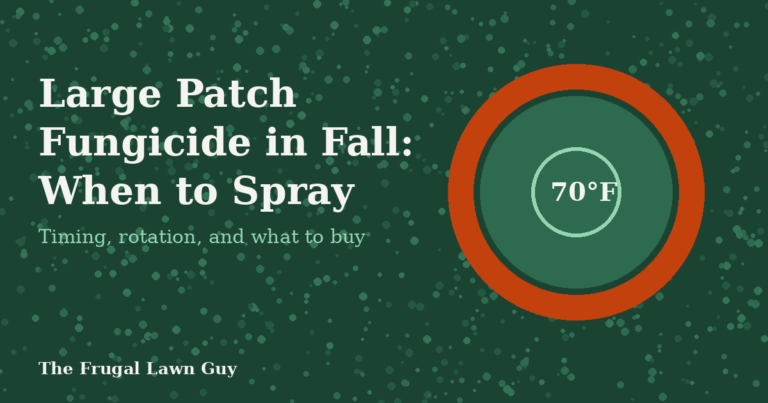
Large patch fungicide timing for zoysia: spray when soil hits 70°F, rotate to a different fungicide group three weeks later, and finish at spring green-up. What to buy inside.
Weed and feed bundles herbicide and fertilizer into one bag, but the two jobs run on different timing rules. Here’s the math on doing them separately, with real prices.
Core aeration for cool-season lawns: when to actually do it, how to tell if your lawn needs it, and why liquid aeration products don’t work. Rent the machine, don’t buy one.

Fall lawn care for warm-season vs cool-season grass: bermuda and zoysia stop nitrogen and switch to potassium, iron, and lime; fescue and bluegrass get aerated, seeded, and fed twice. Same month, opposite moves.

When to stop fertilizing bermuda, zoysia, St. Augustine and centipede: the last nitrogen goes down in late August, not six weeks before frost. Soil temp is the real trigger, and fall potassium is what replaces it.
Fall fertilization is the biggest input a cool-season lawn gets all year: when to apply it, which nitrogen source, and the cost-per-pound-of-nitrogen math that beats marketing.
Fall overseeding for cool-season lawns: the September window, seeding rates by grass type, and the pre-emergent mistake that quietly kills new grass seed. What to buy and what to skip.
The fall pre-emergent is the one pass almost everyone skips, and it is why lawns look neglected in February when the grass is only dormant. When to apply it, and when to skip it on purpose.