
I’ve always loved taking care of my lawn.
When I say always, I mean it. I had a Fisher Price plastic mower that I would push behind my dad when he cut our grass in the late 80s and early 90s on Long Island, NY. When my now wife and I rented our first house together in Nashville, I mowed the grass. I also mowed some of my neighbors’ yards when I was saving up for our wedding.
Right now: late fall
Late October into mid-November is the wind-down, and the two kinds of grass are doing opposite things.
- Warm-season (zoysia, bermuda, St. Augustine, centipede): it is going dormant, so no more nitrogen. If you split your fall pre-emergent, the window for the second pass is closing. After that, a dormant lawn needs very little.
- Cool-season (fescue, bluegrass, rye): this is the last nitrogen feeding of the year, timed near your final mow. Keep mowing until it stops growing, and keep leaves off new seed. Up north, snow mold prevention is mostly a shorter last cut and no matted leaves going into winter.
- Leaves piling up? Mulch-mow them back into the lawn instead of bagging them. It is free, and the chopped leaves feed the lawn.
- Not sure which grass you have? Both fall calendars, side by side.
Want the shopping list right now?
If you already know what you’re looking for, skip the reading. Every product I actually use is one page — generics, name brands where they’re actually worth it, and the cost math behind every pick, broken into sections so you can jump straight to fungicides, fertilizer, iron, or whatever you’re shopping for right now.
Start anywhere
You don’t need to read this site in order. Pick whatever level you’re at and start there. If you don’t know your level yet, there’s an article for that too.
Or skip the reading and let the site do the sorting. Answer seven quick questions and get a plan built for your grass, your problems, and your budget — with the honest math on every product.
There’s something about clean lines and a fresh cut. The smell of the grass, the way the light catches the stripes after a pass. It’s just always done it for me. I know that’s weird to some people. To others reading this, it’s the whole reason you’re here.
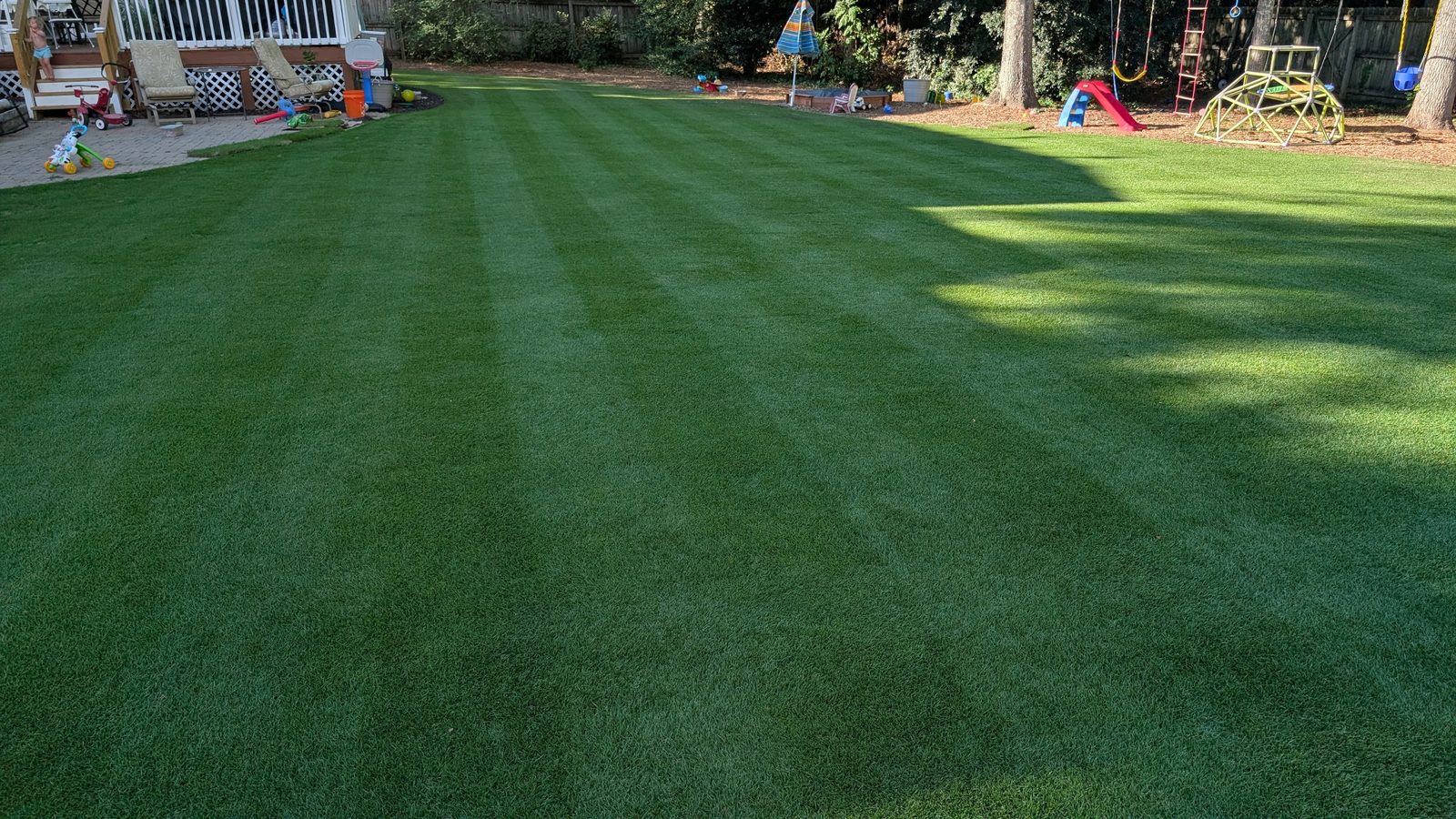
For years I did what most homeowners do: bought what I recognized at the big box store, dumped it on the lawn, hoped for the best. Sometimes it worked. Most of the time it didn’t.
I won’t hire a lawn service to mow or handle weeds, fertilizer, any of it. Three reasons.
First, I’m too cheap. The quotes I’ve collected over the years would buy a small car if you stacked them up.
Second, I don’t really trust them. Spend ten minutes on a lawn forum and you’ll find a stack of horror stories: the wrong herbicide on the wrong grass, a tech in a hurry who skipped half the yard, a “weed and feed” application in July that fried someone’s Zoysia. I’d rather be the one who messes up my own lawn than pay someone else to do it for me.
Third… I’m a bit weird and I enjoy doing it. And admiring the results.
So I started researching. And what I found is the entire reason this site exists.
The thing nobody tells you
Most of the big brand bags you see at Lowe’s and Home Depot are the same active ingredients as the pro stuff, repackaged in smaller, weaker doses and marked up four or five times over.
That orange bag of Scotts Halts Crabgrass Preventer? The active ingredient is pendimethalin. You can buy a small bottle of Prodiamine (different chemistry, same job, lasts longer in the soil) that treats more square footage than three Scotts bags for the same money.
That “weed and feed” you’re spreading every spring? The fertilizer is salt based filler with a sprinkle of broadleaf herbicide. You can mix the same chemistry yourself for pennies on the dollar, control exactly what hits your lawn, and skip the parts you don’t need.
The lawn service spraying your yard for $90 a visit? Their tank mix is built from products sold at the same suppliers any homeowner can order from. The pricey part isn’t the chemicals. It’s the truck and the labor.
Once I started buying the actual versions of what was in those bags, my lawn got better. Not the same. Better. And it cost a fraction of what I’d been spending.
That’s the whole point of this site.
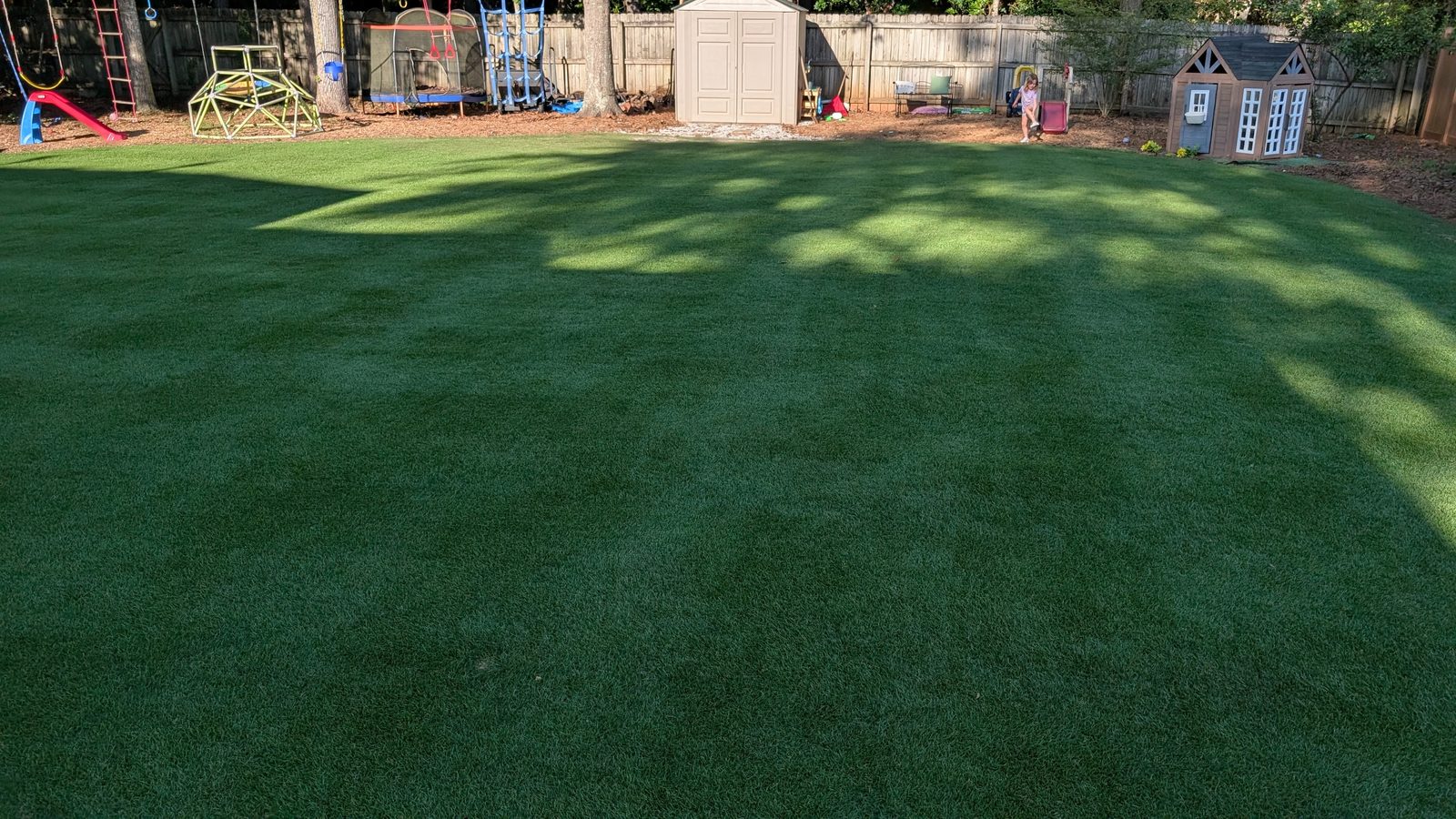
I’m not selling anything off my own shelf. I’m a homeowner with a reel mower, a backpack sprayer, and a soil test, and I want to share what’s actually worked.
Quick note on credentials: I’ve lived in five states. New York, Massachusetts, Ohio, Tennessee, and now Georgia. That’s cool season fescue, rye, and bluegrass in the north, and warm season bermuda and zoysia in the south. I’ve dealt with both, and this site covers both. If you’ve got Kentucky Bluegrass in Boston and your neighbor has Bermuda in Atlanta, we’re talking about both lawns here.
A quick word on what this isn’t
If money is no object, or you just want to grab whatever bag is on the endcap at Home Depot and call it a day, this isn’t the site for you. No hard feelings. There’s plenty of internet for that.
This site is for people who want a better lawn without overpaying for it. Wherever you land on the spectrum, basic green, full Augusta, or anywhere in between, there’s a frugal way to get there. That’s what we’re here for.
Who this is for
Some of you just want green grass. You don’t care about cultivar names. You’re not going to track soil temperatures or rotate fungicide groups. That’s fine. There’s a frugal version of “good enough” that beats whatever your neighbor is paying for, and we’ll lay out exactly what to buy.
Some of you want Augusta in your front yard. You’re going to read fertilizer labels for fun. You already know what a PGR does and you’ve thought hard about which fungicide groups you rotate. There’s a path for you too, and it costs far less than you’ve been told.
Most of you are somewhere in the middle. You want a lawn you’re proud of. You don’t want to be scammed. You want to know what to actually buy and when to actually buy it.
I’ll meet you where you are.
What you’ll find here
- Honest product recommendations for fertilizers, herbicides, pesticides, and fungicides, based on what you are trying to accomplish. Not what a brand paid me to recommend.
- Side by side cost comparisons. The same active ingredient at four different price points, so you can see the markup yourself.
- Step by step programs for whatever level you’re playing at. A simple seasonal plan at the entry level. A full soil temperature triggered calendar at the pro level.
- The occasional opinion piece, because I have a lot of those.
Some of what you’ll read here will go against advice your dad gave you, your local hardware store guy gave you, or your “lawn coach” on YouTube gave you. That’s fine. Try it on your own lawn. The grass either greens up or it doesn’t.
One note on the links
This site uses affiliate links. If you click through and buy something, I get a small commission. To be straight with you: every product I recommend is something I actually use on my own lawn. The links don’t change what I tell you to buy. They just keep the lights on here.
Welcome. Glad you’re here.
— The Frugal Lawn Guy
PS: While I have a day job and a family of 6, I am happy to help when I can. Questions, help, feedback, whatever. Reach me at [email protected].