The Frugal Lawn Guy’s Product Picks
Everything on this page passed two tests: does it work, and does the cost math hold up. For chemistry, the generic almost always wins: same molecule, a fraction of the price. For equipment, the cheapest option is usually the expensive one. And a few brands genuinely earn the premium; those are called out too, along with what I’ve stopped buying.
I’ve broken these up by type for easy navigation. I use most of these, but some I don’t, either because it’s for a different grass type, or I don’t have that issue currently. But each one is my actual pick for that job: what I’d buy the day I needed it, with the cost math behind why.
One more thing worth saying up front: frugal doesn’t necessarily mean cheap. Some of these products are expensive, and that’s for one of two reasons: there isn’t another option, or the cheap stuff doesn’t work.
Jump to a section
- Pre-Emergents
- Post-Emergent, Sedge & Bermuda-Removal Herbicides
- Fungicides
- Insecticides
- Fertilizer Inputs
- Iron and Micronutrients
- Plant Growth Regulator
- Biostimulants and Adjuvants
- Leveling, Plugging & Edging
- Equipment & Soil Tools
- Quick Reference Table
Every product below has survived two tests. Does it work, specifically, is the claim behind it backed by something more credible than the label? And does the cost math make sense, am I paying for the active ingredient, or for the label?
Three rules govern this list:
For chemistry, generic almost always wins. A gallon of propiconazole 14.3 and a gallon of Banner MAXX II are the same molecule at the same concentration. One costs $95. The other costs $307. The grass doesn’t know which jug it came from. When a generic exists, that’s what I buy.
For equipment, cheapest is usually wrong. A $30 plastic-wheel spreader stripes the lawn, double-applies, and burns turf where it overlaps. It doesn’t save money. The frugal answer on equipment is mid-tier, the $150 spreader, not the $30 or the $650.
Some brands are worth the money. When a product has chemistry or a label with no real equivalent, the brand is justified. I’ll flag every one of those below.
I grow Zorro zoysia on 8,000 sq ft in Peachtree City, Georgia, and I’ve lived with cool-season lawns too, Kentucky bluegrass in Ohio, tall fescue in Massachusetts, bermuda in Tennessee. Where something is warm-season specific, I’ll say so.
A note on the links: Some links below are affiliate links. If you buy through one, I may earn a small commission at no extra cost to you. It never changes what I recommend. The active ingredient is the product, the brand is the markup, so I’d rather point you to the cheaper option that works.
Pre-Emergents
Prodiamine 65 WDG
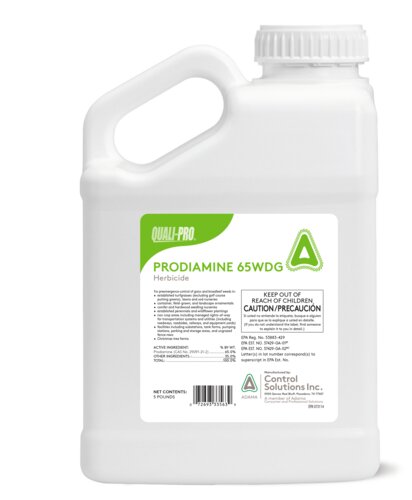
What it is: Prodiamine at 65% concentration, the generic Barricade. Water-dispersible granule that you mix into a sprayer. The benchmark pre-emergent for crabgrass and annual grass control.
Why it made the list: At the mid application rate, this runs roughly $0.41 per 1,000 square feet. The 5-pound jug at DoMyOwn ($88.87) is a multi-season supply for most home lawns. The math is decisive.
The comparison that matters: Scotts Halts at Home Depot uses pendimethalin, a different active ingredient entirely, in a granular format and costs roughly $4.77 per 1,000 square feet. That’s ten times the cost for weaker chemistry. If you’ve been buying Scotts Halts, this is the single largest money leak in a typical lawn program.
Who it’s for: Every persona. Pre-emergent is non-negotiable if you have crabgrass pressure. The Nut runs two passes at a split rate; the Rationalist applies once in late winter at the standard rate; the Minimalist can find a granular-formulated prodiamine product and run it through a spreader. All three are right.
When NOT to buy it: If you’re overseeding within 60 days. Prodiamine blocks all seed germination, not just weeds. Pull back on timing and rate in any renovation zones.
Dithiopyr 2EW (Generic Dimension): The Late-Timer’s Tool
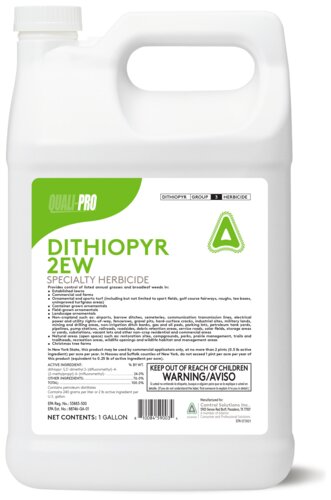
What it is: Dithiopyr at 24% concentration. Pre-emergent with one unique property prodiamine doesn’t have: early post-emergent activity on crabgrass in the one- to two-tiller stage.
Why it made the list: It’s the rescue product when you miss the ideal pre-emergent window. If crabgrass is already germinating but hasn’t hit three tillers, dithiopyr can still knock it back. Prodiamine at that point does nothing.
Price: Gallon from DoMyOwn at $272.22. Most home lawns only need a quart for the late-application scenario, which brings the up-front cost down considerably.
Who it’s for: Rationalist and Nut who know they’re going to be late. The Minimalist should focus on getting prodiamine down on time.
Post-Emergent Herbicides
Celsius WG: The All-In-One Warm-Season Post-Emergent
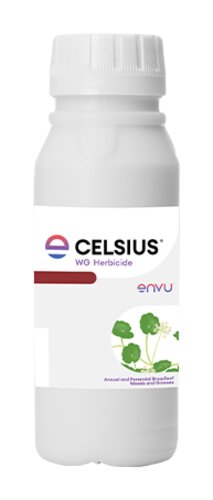
What it is: Three active ingredients, thiencarbazone-methyl, iodosulfuron, and dicamba, in one product targeting a broad spectrum of warm-season weeds.
Why it made the list, and why this one gets a pass on the generic rule: There is no generic for Celsius WG. It’s the only consumer product that selectively controls crabgrass, nutsedge, dollarweed, doveweed, and goosegrass on bermuda, zoysia, St. Augustine, and centipede in one pass. No substitute has that label. When the brand is the only option, the brand is the right answer.
Price: $133.82 for 10 ounces at DoMyOwn. At the low warm-season rate, that covers up to 87,000 square feet, roughly $1.54 per 1,000 square feet. For most home lawns, a single bottle lasts multiple seasons.
Don’t want to drop $130+ on a bottle you may not finish in your lifetime? Celsius WG also comes in a 0.226 oz single-dose packet, sized for one application on up to 4,000 sq ft at the low rate (2,000 sq ft at the high rate). DoMyOwn sells the packet for $19.98; Amazon carries the same Envu product under its “Prime Source” packaging for $16.30, actually the cheaper of the two for a single dose. Per ounce, the small packet runs $60–90/oz against the 10 oz bottle’s $13.38/oz, so it’s not the buy if you already know you’ll need Celsius again. It’s the buy if you’ve got one bad patch to treat, or want to try it before committing to a bottle that outlives most lawns’ actual need for it.
State restriction flag: Not available in California, Alaska, or New York. Licensed applicators only in Connecticut, Vermont, and Washington. Southeast readers are generally fine, verify before ordering.
Who it’s for: Rationalist and Nut with multiple warm-season weed types hitting simultaneously. It’s overkill for pure crabgrass, that’s quinclorac territory. Pull Celsius out when you’re fighting two or three weed types on the same lawn.
When NOT to buy it: If you’re in a restricted state. And don’t try to use it preventively, it has no pre-emergent activity.
Drive XLR8: The Crabgrass Specialist
What it is: Quinclorac at 18.92%, the selective post-emergent for crabgrass, with some activity on yellow nutsedge and a handful of broadleaves. The full crabgrass breakdown, including timing and rates, is in the Crabgrass Rescue article.
Why it made the list: When the problem is specifically crabgrass and it’s already germinated, quinclorac is the right tool on zoysia and bermuda. Effective, well-understood chemistry, labeled appropriately. Dose it accurately and pair it with an MSO surfactant (see Biostimulants and Adjuvants), it works better with one than without.
Counterintuitive pricing note: The branded Drive XLR8 from BASF is currently cheaper than the generic equivalent at major DIY retailers, roughly $59.98 for 64 ounces at DoMyOwn vs. the Quali-Pro generic at $76.98 for the same volume. When the brand is the better deal, buy the brand. Always check both. The 64-ounce jug is years of supply for a home lawn.
CRITICAL WARNING: Quinclorac is NOT safe on St. Augustinegrass, centipedegrass, or bahiagrass. Zoysia and bermuda are fine. Check your grass type before you spray.
Who it’s for: Zoysia and bermuda homeowners with crabgrass breakthrough after a missed or thin pre-emergent application.
Sertay (Sulfosulfuron): The Sedge and Tough-Weed Generic
What it is: Sulfosulfuron, the direct generic of Certainty. An ALS-inhibitor post-emergent aimed at nutsedge and a longer list of tougher broadleaf and grassy weeds that quinclorac and Celsius don’t fully cover.
Why it made the list: Same active ingredient as Certainty, roughly half the price. Between Sertay and Celsius, almost everything in a warm-season weed program is covered, Celsius for the broad multi-weed pass, Sertay when sedge specifically is the problem.
Who it’s for: Anyone fighting yellow or purple nutsedge, or the tougher weeds outside Celsius’s label. Pairs with the same MSO surfactant discipline as the rest of this list, most ALS-inhibitor herbicides underperform without one.
Recognition + Fusilade II Herbicide Kit: Removing Bermuda from Zoysia (or St. Augustine)
What it is: A two-product tank-mix kit for one specific job: killing off common bermudagrass (and goosegrass) that’s invaded a zoysia or St. Augustine lawn, without killing the zoysia or St. Augustine along with it. Recognition (trifloxysulfuron-sodium 20.4%, Syngenta) carries a proprietary safener called metcamifen that lets zoysia and St. Augustine tolerate a herbicide pass that would otherwise hurt them. Fusilade II (fluazifop-P-butyl 24.5%, Syngenta) is the grass-killer doing the actual work on the bermuda. Neither one does this job alone, it’s the combination that’s selective.
This is the exception to “generic wins.” There’s no generic version of this combination, and no other consumer product does this specific job, pulling bermuda out of a desirable warm-season lawn without collateral damage. When there’s no substitute, the brand-name price is the real price.
Price: DoMyOwn sells the two as a kit for $123.50 (a 0.45 oz bottle of Recognition + a 4 oz bottle of Fusilade II + the required surfactant and marking dye), which runs about $18 cheaper than buying the same four components separately ($141.71). The 0.45 oz Recognition bottle alone treats up to 10,000 sq ft; the kit’s Fusilade II ships in the smaller size meant for spot and residential-scale work.
Real-world timeline, per DoMyOwn’s own customer reviews: most homeowners report the bermuda visibly yellowing and dying within 1–4 weeks of a single pass, with the zoysia or St. Augustine unaffected. Syngenta’s own label guidance is more conservative, full control of an established bermuda infestation can take repeat applications on a 4–6 week interval, potentially across more than one growing season. Plan on this being a multi-application project, not a one-and-done spray.
Rates (per the kit label): Recognition at 1.95 oz/acre (0.045 oz/1,000 sq ft) for both St. Augustine and zoysia; Fusilade II at 16–24 oz/acre (0.37–0.55 oz/1,000 sq ft) on zoysia. A separate, lower-rate Fusilade-II-alone protocol exists for removing bermuda from cool-season turf like fescue (0.07–0.14 oz/1,000 sq ft, applied around June 1 and every 28 days after), that’s a different job than the zoysia/St. Augustine kit above, so match the product to the actual grass you’re protecting.
Restriction flag: Not sold in a long list of states, AK, CT, DC, IA, ID, ME, MI, MN, MT, ND, NH, NY, OR, SD, VT, WA, WI, WY. Georgia and most of the Southeast are fine. Verify before ordering if you’re outside that footprint.
Who it’s for: Zoysia or St. Augustine homeowners with common bermuda creeping in from a neighbor’s yard or an old lawn edge. Not for a bermuda lawn that just needs regular post-emergent weed control, that’s Celsius, Sertay, or Drive XLR8 above. This is specifically for killing off bermuda itself as the unwanted grass.
Fungicides
Propiconazole 14.3: The Biggest Brand Gap on the Shelf
What it is: Propiconazole at 14.3% emulsifiable concentrate. Fungicide group 3. The workhorse chemistry for dollar spot, large patch, brown patch, gray leaf spot, rust, and spring dead spot. Gunner 14.3 is the specific generic I buy and rotate.
Why it made the list: The generic vs. brand math here is harder to ignore than anything else on this list. Generic propiconazole 14.3 at DoMyOwn: $95.53 per gallon. Banner MAXX II (Syngenta): $307.28 per gallon. Same active ingredient. Same 14.3% concentration. Same fungicide group. Same efficacy. The brand charges three times as much for identical chemistry.
At 1–2 ounces per 1,000 square feet, a gallon treats the lawn 64 to 128 times. For most homeowners running a two-pass fall disease program on 5,000–10,000 sq ft, a gallon is a multi-year supply at under $1.50 per thousand square feet.
Who it’s for: Every spray-program owner growing warm-season turf in the Southeast. Propiconazole rotates with azoxystrobin, fungicide group 11 first application, fungicide group 3 the follow-up 28 days later, for resistance management and complete large-patch coverage. Full fungicide group rotation breakdown in the Large Patch article.
Azoxy 2SC Select: Generic Azoxystrobin
What it is: Azoxystrobin at 22.9% liquid concentrate. Fungicide group 11 strobilurin. Broad-spectrum preventive for large patch, brown patch, take-all root rot, and gray leaf spot. Atticus Artavia 2 SC is the specific product I run in my own rotation, paired with Gunner propiconazole above.
Why it made the list: Roughly $0.37 to $0.75 per 1,000 square feet from a gallon at $123.75 (DoMyOwn). Heritage SC brand liquid at $160+ for four ounces runs $8–28 per thousand square feet by comparison. Up to ten times the cost for the same active ingredient at the same concentration.
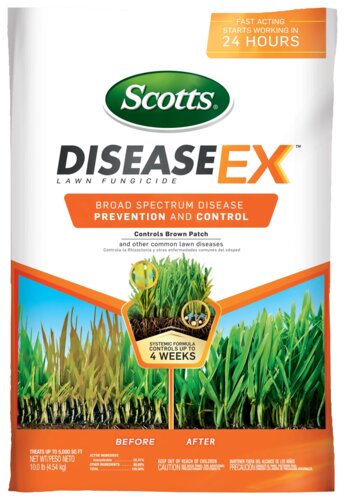
The granular note: If you don’t have a sprayer, Scotts DiseaseEx at Home Depot is 0.31% azoxystrobin granular at $21.47 for 10 pounds, roughly $4.29 per 1,000 square feet. Heritage G is the same active at the same concentration in the same granular carrier and costs more per square foot. DiseaseEx undercuts Heritage G while being the same product. The Minimalist’s version of this entry is DiseaseEx. The Nut’s version is Azoxy 2SC Select (or Artavia).
Who it’s for: Azoxy 2SC Select / Artavia for anyone running a sprayer program. DiseaseEx for the no-sprayer homeowner dealing with a specific disease event and wanting to do something about it this weekend.
ProStar 70 WG, The Third-Group Rotation Tool
What it is: Flutolanil at 70% WG. Fungicide group 7, a completely different biochemical mode of action from anything in the typical homeowner fungicide rotation.
Why it made the list: Most Southeast zoysia disease programs run fungicide group 11 (azoxystrobin) and fungicide group 3 (propiconazole) indefinitely. That’s a two-group rotation. If you never break out of those two groups, you’re selecting for resistance in the fungal population over time. ProStar is the group 7 partner that completes a genuine three-group rotation. Purdue’s turfgrass program specifically cites flutolanil for Rhizoctonia large patch efficacy. No consumer generic exists, so the brand is the only option.
Price: Around $245–256 for a 3-pound jug from PeStrong or Seed World USA. At the low application rate for large patch, that jug covers enough square footage to make the per-application cost reasonable for a high-value lawn.
Availability note: DoMyOwn lists ProStar as discontinued. It’s not, the Envu rebrand created distribution confusion. PeStrong and Seed World USA have it in stock.
Who it’s for: The Nut running a serious disease-prevention program who wants to rotate properly. The Rationalist doesn’t need to track down ProStar unless they’ve had repeated large patch failures on the standard two-group rotation.
Insecticides
Bifen I/T: The Benchmark Surface Insecticide
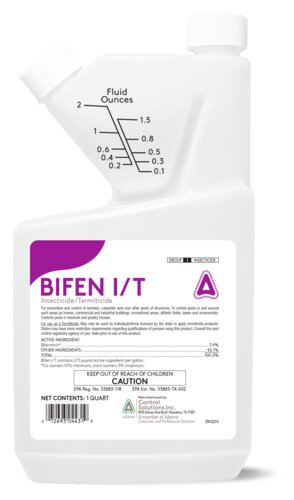
What it is: Bifenthrin 7.9% liquid concentrate from Control Solutions. The most versatile surface insecticide for residential warm-season lawns.
Why it made the list: Armyworms, chinch bugs, fire ants (perimeter), sod webworms, billbugs, mole crickets, fleas, and ticks, all in one product. Quart at DoMyOwn: $40.98. Residual up to three months. Cost per 1,000 square feet: roughly $0.65–$1.30 depending on rate and pest. It also doubles as a foundation perimeter treatment.
vs. Talstar Pro: Bifenthrin 7.9%, same manufacturer, same EPA registration. Talstar Pro is the same product with a different label name at a higher price. Bifen I/T at $55/gal vs. Talstar at $63/gal. Buy Bifen I/T.
What it doesn’t do: Bifen is a surface contact insecticide. It doesn’t prevent grubs. If grubs are the target, that’s a different product.
Who it’s for: Any homeowner with surface insect pressure in the Southeast. This is the one bottle that handles most of it.
Acelepryn: The Grub Insurance Policy
What it is: Chlorantraniliprole 18.4% SC from Syngenta. The best preventive grub and billbug treatment available to homeowners.
Why the brand is justified here: No generic exists yet for homeowner use (expected in the next few years as the diamide patent situation resolves). The 4-ounce bottle at DoMyOwn costs $72.98 and covers roughly one acre at the preventive rate, about $1.66 per 1,000 square feet. One application per year. EPA Reduced Risk designation, the safest insecticide class for pollinators on this list. Works on species that have developed resistance to imidacloprid.
The comparison that flips the script: Big-box imidacloprid granules (Scotts GrubEx, BioAdvanced Grub Plus) run $4–5 per 1,000 square feet. Acelepryn runs $1.66 at the preventive rate. The premium product costs less per application, works better, and carries a safer environmental profile. This is one of the few places on the list where the more expensive product beats the budget option on all three dimensions.
Application window: April through May once per year, water in immediately after application.
Who it’s for: Anyone with a history of grub or billbug damage, or anyone growing a high-investment warm-season lawn where replacing dead turf is a real cost.
Dominion 2L: Budget Grub Prevention
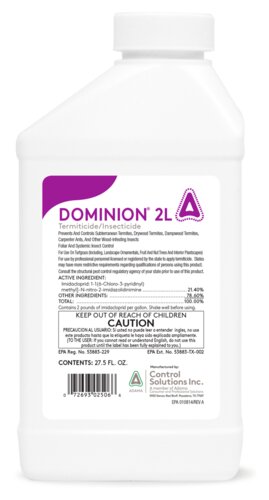
What it is: Imidacloprid 21.4% liquid concentrate, a professional-channel imidacloprid product available to homeowners at a fraction of the big-box price.
Why it made the list: A 27.5-ounce bottle at DoMyOwn for $35.76 covers roughly one acre at the preventive rate, about $0.78 per 1,000 square feet. Big-box imidacloprid granule bags run $4–5 per 1,000 square feet for the same active ingredient. That’s a 5–6x markup for something you can buy in professional packaging for less.
vs. Acelepryn: Dominion 2L is the budget pick when cost is the constraint. Acelepryn has better chemistry for resistant populations and a cleaner safety profile, but at roughly twice the per-bottle cost. If you’ve never had a documented grub issue and want basic prevention, Dominion 2L is the call.
Who it’s for: Budget-conscious homeowners who want preventive grub control without paying retail markup.
Taurus SC: Fire Ant Specialist
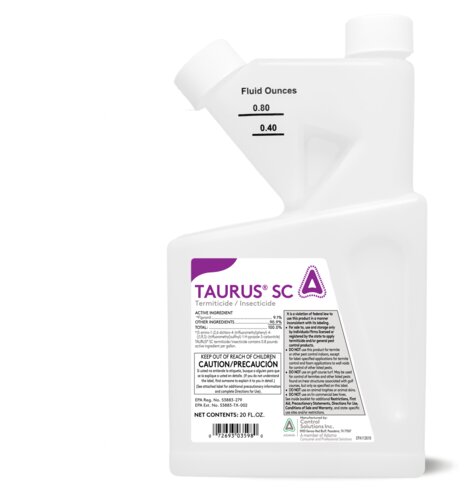
What it is: Fipronil 9.1%, the generic Termidor. Broadcast and mound-drench control of fire ants and a broad range of surface insects.
Why it made the list: Taurus SC at DoMyOwn costs $48.48 for 20 ounces. Termidor SC, same 9.1% fipronil, same concentration, same manufacturer chemistry, runs $64.95 for 20 ounces at competing suppliers. That’s a 25% premium for nothing. Taurus also has no homeowner volume restrictions that Termidor imposes. Clear choice.
Who it’s for: Southeast homeowners with fire ant pressure. If fire ants aren’t the specific target, Bifen I/T handles most surface insects and there’s no need to buy both.
Restriction note: Fipronil is prohibited in California. Non-issue for Georgia and most of the Southeast.
Fertilizer Inputs
Urea 46-0-0: The Nitrogen Benchmark
What it is: Urea, 46% nitrogen by weight. The highest-concentration dry nitrogen fertilizer available and the input every other nitrogen source gets measured against.
Why it made the list: At roughly $30.40 for a 50-pound bag (Seven Springs Farm Supply or comparable at farm supply stores and Southern States), urea delivers nitrogen at $1.32 per pound of actual N. That’s the number. Every bag of branded consumer fertilizer is paying more than that for something. Slow-release coating, blended NPK, or a recognizable name. Sometimes the premium is worth it. Most of the time it isn’t.
The Scotts math: Scotts Turf Builder at Home Depot currently runs $57.42 for 37.9 pounds, roughly 12 pounds of actual nitrogen per bag at $4.75 per pound of N. That’s 3.6 times more expensive than urea per unit of nutrient delivered. The slow-release coating in Scotts does have real value. It doesn’t justify tripling the input cost for a homeowner willing to split their applications.
Where to buy: Southern States, farm co-ops, Seven Springs Farm Supply online. Not Tractor Supply, they don’t stock urea 46-0-0 nationally. Call your local feed store first. If you can’t source locally, the online option I link is Anderson’s HCU 44-0-0, a humic-coated urea: $85.35 for 50 lb shipped from DoMyOwn (checked Oct 21, 2026), about $3.88 per pound of N. Shipping is the premium you pay for not driving to a feed store.
Who it’s for: The Nut who wants full control over their inputs. The Rationalist uses urea for two or three of their four annual nitrogen applications and reaches for something safer in midsummer.
AMS (21-0-0-24S): Nitrogen With Built-In Sulfur
What it is: Ammonium sulfate, 21% nitrogen, 24% sulfur. All ammoniacal nitrogen, zero volatilization risk, mildly acidifying.
Why it made the list: The sulfur content is the point. Southeast lawns trend toward sulfur deficiency, and sulfur deficiency shows up as diffuse paleness that iron can’t fix. AMS delivers both nitrogen and sulfur in one pass with no timing anxiety. You don’t need to water it in immediately the way urea can require. At roughly $31.15 for 50 pounds (Intermountain Turf Supply), the cost per pound of N is higher than urea ($2.97 vs. $1.32), but the sulfur delivery makes it worth rotating in for at least one or two applications per season.
Where to buy: Intermountain Turf Supply, farm supply stores, and Walmart (in-store, $18–25 per 50-lb bag). If you can’t source locally, Easy Peasy Plants on Amazon (ASIN B0BVNSKBS9) carries 5, 10, and 20-lb sizes, the 20-lb is the best cost-per-pound option online.
Who it’s for: Rationalist through Nut. One or two AMS applications per season handles the sulfur requirement alongside urea for the rest.
Sulfate of Potash 0-0-50: Sulfate of Potash
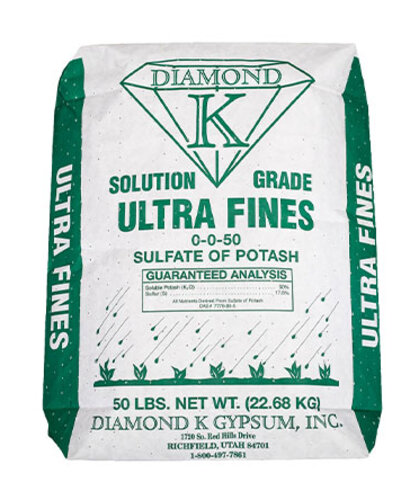
What it is: Potassium sulfate, 50% K₂O, 17% sulfur, zero chloride.
Why it made the list: The alternative, muriate of potash (MOP, 0-0-60), is cheaper per pound of K, and I still don’t recommend it. MOP is roughly 47% chloride, and that adds salt stress to grass that’s already heat-stressed. Zoysia, St. Augustine, and centipede are the most sensitive, especially in summer. The premium for SOP buys real insurance.
Price: Roughly $39.95 for 50 pounds at Seven Springs.
The rule: SOP on every lawn. It costs a little more and takes chloride off the list of things that can go wrong.
Who it’s for: Any warm-season homeowner doing summer potassium applications.
Expert Gardener 30-0-4 + 2% Iron, The Minimalist’s Shelf Pick
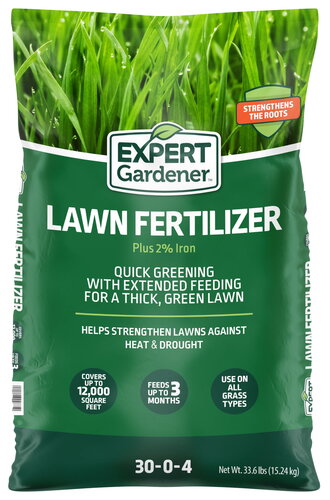
What it is: Walmart’s house-brand granular fertilizer. 33.6-pound bag, covers 12,000 square feet for roughly $19.97, about $1.67 per 1,000 square feet with iron included.
Why it made the list: It’s not a replacement for a real fertility program built around urea and AMS. But it’s an honest bag, the value is genuine, and there will always be a situation where someone needs something off a shelf that weekend without ordering online. When that’s the question, this is the answer.
Who it’s for: The Minimalist, and the entry-level Rationalist who wants a single-product application without mixing straight inputs.
When NOT to buy it: If you’re already running separate urea, AMS, and SOP applications with a dialed rate. At that point the cost per pound of N in this bag is higher than your program, and the NPK ratio won’t match your soil test targets anyway.
Alaska Morbloom 0-10-10: Establishment Phase Only
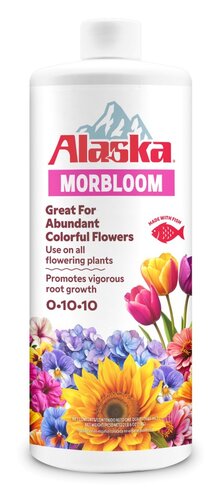
What it is: Liquid 0-10-10 with fish-based organic content. Zero nitrogen, which is the point. Phosphorus and potassium without pushing top growth during the rooting window.
Why it made the list: I spray the seedbed with this before laying sod or putting in plugs. The phosphorus and potassium combination primes root development during establishment. Sod that would normally take two to three weeks to grab the soil seems to root noticeably faster after a Morbloom treatment. I’ve done it both ways; the difference is real enough to keep it in the routine.
This is not a regular-program input. One application before any establishment work, then put it away. $15 for a quart at Amazon or garden centers.
Who it’s for: Anyone about to lay sod, overseed, or plant plugs. Nobody else needs to buy this.
And skip Weed and Feed entirely. The broadleaf herbicide in it works best when the lawn is actively growing, which is also exactly when you shouldn’t be hitting warm-season turf with a high-rate herbicide application. The two inputs are in direct conflict on timing, and bagging them together means you apply both whether or not you need both.
Iron and Micronutrients
Ferrous Sulfate (Bulk, Sprayable Grade)
What it is: Iron sulfate in the 20% Fe sprayable-grade formulation, the cheapest iron source available.
Why it made the list: A 50-pound bag runs roughly $32–38 from SiteOne or Seven Springs. At 2 ounces per 1,000 square feet as a foliar iron application, the cost per pass rounds to $0.03–$0.05. Nothing else on this list costs less per application. On Southeast soils at normal pH (5.5–6.8), ferrous sulfate is plant-available, absorbs well foliarly, and delivers the color response people chase. This is what I tank-mix with every T-Nex PGR application.
When to upgrade to chelated iron: If your soil pH is above 7.0, ionic iron (Fe2+) oxidizes quickly and precipitates before the plant can absorb it. At that point you need DTPA chelated iron (Custom Hydro and similar), which stays available up to pH 7.5. Below 7.0, ferrous sulfate is fine and ferrous sulfate is cheap.
Stain warning: Ferrous sulfate will stain concrete and pavers orange-brown. Rinse hardscapes immediately. Don’t spray in the wind.
Who it’s for: Every homeowner running a sprayer program. Add it to every PGR application pass.
FeATURE 6-0-0 Chelated Micronutrient Fertilizer: My Go-To for Color
What it is: A chelated micronutrient blend, iron, sulfur, magnesium, and manganese, complexed to stay stable with amine-based fertilizers and herbicides in the tank. Not a single-nutrient iron product like ferrous sulfate; it’s a broader micronutrient package built for the same job.
Why it made the list: Ferrous sulfate is the frugal default above, but it can be finicky in tank mixes with certain inputs, precipitation, compatibility issues. FeATURE’s chelated complex is more stable across a wider pH and chemistry range, which matters when you’re mixing PGR + iron + another input in the same pass. In my own program it’s the pick when I want deep green without dumping more nitrogen, and it won’t stain concrete the way ferrous sulfate does. More on iron chemistry and rates in the iron guide.
Price and availability: $26.17 for a 3-lb bag at DoMyOwn, applied at 1–2 oz per 1,000 sq ft. It’s a real, standing product listing, not a specialty-distributor-only item, but DoMyOwn does run out of stock on it periodically, if it’s showing unavailable when you look, check back or use ferrous sulfate plus a jar-test in the meantime.
Who it’s for: The Nut running multi-input tank mixes who wants the cleanest, most stable iron chemistry, or anyone who wants color without staining hardscape.
Plant Growth Regulator
T-Nex 1AQ
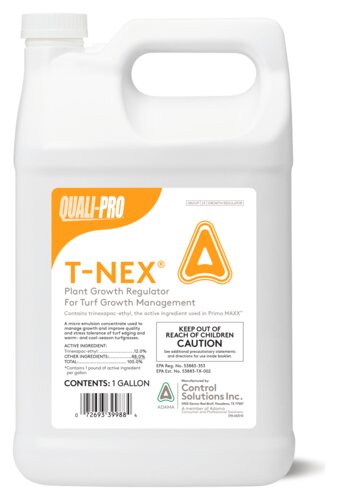
What it is: Trinexapac-ethyl 12%, the generic Primo MAXX, slightly higher concentration than the branded product.
The short version: T-Nex 1AQ and Primo MAXX are the same gibberellin-inhibiting chemistry. T-Nex costs $119.96 per gallon on Amazon (checked Oct 21, 2026). Primo MAXX runs $350–450 per gallon. That’s a 3x markup for identical performance. A gallon of T-Nex is multiple seasons of supply for any home lawn at the zoysia rate of 0.13 oz per 1,000 square feet.
Total season cost on 8,000 sq ft zoysia: Roughly $20–30 in T-Nex for the full growing season. Tank-mixed with ferrous sulfate on every pass: add another few dollars. The combination, denser turf, darker color, less mowing, improved stress tolerance, for under $35 in chemistry per season is one of the best deals in lawn care.
For the full program: rates, GDD scheduling, the iron tank-mix, and how to avoid the rebound effect, the Primo MAXX / PGR guide covers it completely.
Atticus Pramaxis MEC (8 oz): The No-Gallon-Commitment Option
What it is: Trinexapac-ethyl at 11.3%, another generic in the same PGR class as T-Nex above, sold in a small 8-ounce bottle instead of by the gallon. This is the PGR I’m actually running in my own rotation right now.
Why it made the list: T-Nex is the better per-ounce deal, but it only comes in gallon jugs, more than most homeowners want to commit to or store for a first season of PGR use. Pramaxis MEC sells a real 8 oz bottle through Amazon for $52.99, no minimum gallon purchase, no distributor account needed.
The math: At my own application rate of 0.25 fl oz per 1,000 square feet, that’s roughly $1.66 per 1,000 square feet per pass, about 5x what T-Nex costs per application. An 8 oz bottle covers about 32,000 square feet total, four full passes on my own 8,000 sq ft zoysia. It’s not the frugal choice by the raw numbers; T-Nex is still the better buy once you know you’ll run PGR every season. It’s the right choice if you want to try trinexapac for a season without buying a gallon you might not finish.
Who it’s for: Anyone testing PGR for the first time, or anyone with a small lawn who doesn’t want gallon-sized chemistry sitting in the garage. Once you know you’ll run PGR every season, switch to T-Nex above and don’t look back on the per-ounce math.
Biostimulants and Adjuvants
DEF, The Cheapest Foliar Nitrogen You’ll Ever Buy
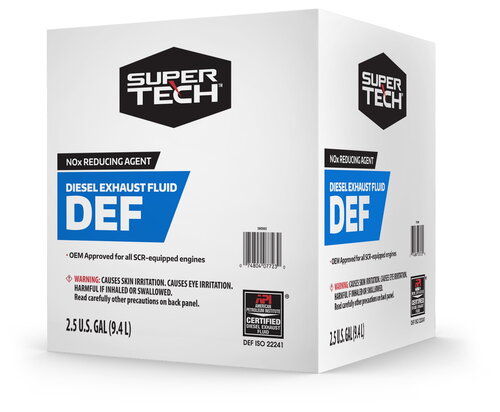
What it is: Diesel exhaust fluid. 32.5% urea dissolved in deionized water. Food-grade, sold at every Walmart, truck stop, and auto parts store.
Why it made the list: At $15.48 for 2.5 gallons (Super Tech at Walmart), this is urea dissolved in water at roughly $0.48–$0.68 per 1,000 square feet in foliar nitrogen. Applied at 10–14 oz per 1,000 sq ft, it delivers about 0.1 lb of nitrogen absorbed directly through the leaf blade. Quick color, no surge growth, no extra mowing required. This is exactly the spoon-feeding application technique golf course superintendents use between granular programs.
This isn’t a hack, it’s chemistry. Urea is urea. DEF is 32.5% urea in deionized water, which is identical in composition to any liquid urea nitrogen fertilizer. The difference is that the foliar fertilizer in a spray jug at the garden center costs significantly more for the same dissolved urea.
Application note: Spray in the evening. Don’t irrigate for two hours, you want foliar absorption, not soil drench. At these rates, burn risk is essentially zero.
Buy the generic: Super Tech DEF at $15.48 is chemically identical to BlueDEF at $22 for the same 2.5-gallon size. The brand is markup.
Who it’s for: The Nut doing spoon-feeding between granular cycles, and anyone who wants mid-summer color pop without pushing growth.
Sprayable AMS 21-0-0
What it is: A sprayable-grade ammonium sulfate (21-0-0), distinct from the granular anti-cake AMS in the Fertilizer Inputs section above, this one dissolves clean for tank-mix use. It’s the nitrogen leg of my foliar growth-and-color tank, not a separate biostimulant product.
Why it made the list: It’s a real part of my actual program, not a filler entry. Check a local ag co-op or farm supply store first. Spray-grade AMS is a common enough input that a lot of areas have it cheaper than anything shipped to your door. If you don’t have one nearby, it’s sold through Amazon: Greenway Biotech’s 25 lb bag is the water-soluble grade, but shipped it costs more per pound than a co-op bag, so it’s worth the detour if you can make it. It layers on top of the urea/AMS/SOP fertility base and the ferrous sulfate or FeATURE micronutrient pass. It’s not a replacement for either.
Who it’s for: Rationalist through Nut who already have the fertility fundamentals dialed and want to add a foliar biostimulant layer on top.
Maxicrop Liquid Seaweed
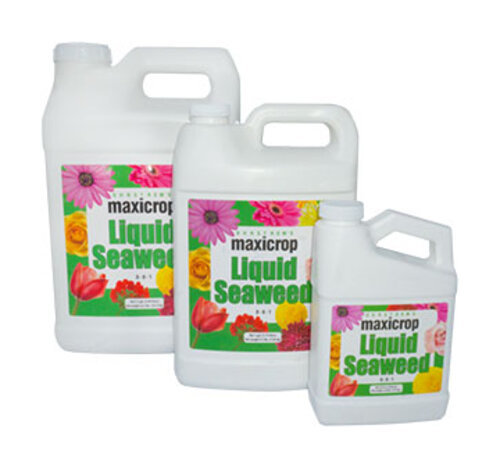
What it is: Concentrated Ascophyllum nodosum extract, Norwegian kelp, with natural cytokinin and auxin content.
Why it made the list: The cytokinin fraction supports lateral growth and stress recovery. I add it to tank mixes during the summer heat-stress window on the zoysia, not as a fertilizer, but as a biostimulant during the period when the lawn is working hardest against the heat. The research backing ascophyllum nodosum is reasonably solid for a biostimulant; it’s not magic but it’s not marketing.
Price: $13.95 for a quart at Seed World USA, roughly $0.25–$0.44 per 1,000 square feet per application. The branded biostimulant packs from lawn YouTube channels are largely the same Ascophyllum nodosum extract plus a few other inputs at 3–4x the price. Buy Maxicrop. If you want humic acid too, buy that separately in bulk form.
Kelp4less fulvic / humic / kelp blend is the other biostimulant I mix into foliar applications, no affiliate relationship there, I just use it, so no link.
Who it’s for: Rationalist through Nut. Biostimulants are a Tier B/A lawn addition. Don’t spend money here until the fertility and water fundamentals are in order.
MSO (Methylated Seed Oil): The Forgotten Adjuvant
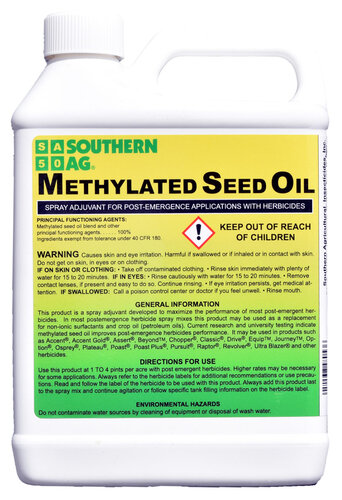
What it is: Methylated vegetable oil, a surfactant that penetrates the waxy cuticle of plant leaves more aggressively than a standard non-ionic surfactant.
Why it made the list: Most homeowners spray post-emergent herbicides without any surfactant and get 60–70% efficacy because the product beads up and rolls off the leaf rather than absorbing. MSO fixes that. Celsius WG calls for it specifically (0.5% v/v). Drive XLR8 and Sertay both recommend a surfactant. Most ALS-inhibitor herbicides work meaningfully better with it than without, especially on waxy warm-season grass during active summer growth.
Price: Southern Ag at roughly $19.95 for a quart (Walmart). Generic equivalents at $15–18 from Amazon. A quart lasts most homeowners a full season or more.
Don’t buy branded adjuvants. MSO is MSO. Any generic methylated seed oil does the same job at the same rate. Southern Ag, ProSolutions, the chemistry is identical.
Who it’s for: Everyone spraying post-emergent herbicides. If you’re not adding surfactant, you’re leaving efficacy on the table with every application.
Spray Dye and Spreader Sticker
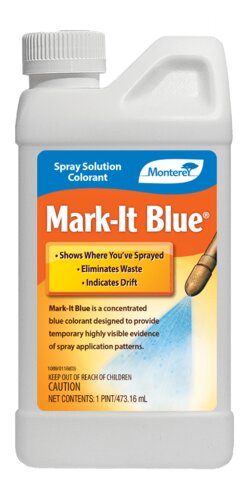
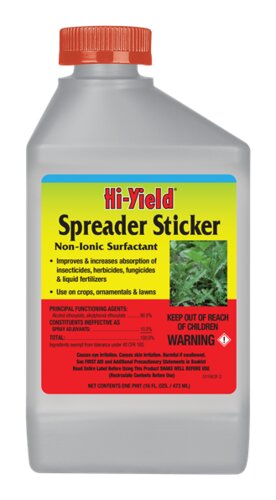
What it is: Two cheap add-ons that punch above their price. Monterey Mark-It Blue (or generic blue spray dye) shows exactly where you’ve sprayed, no skips or double passes. Hi-Yield Spreader Sticker helps foliar products grab the blade instead of beading off, doing a similar job to MSO for products that don’t need a full surfactant.
Buy generic where you can. TurfMark Blue from DoMyOwn runs $42 per quart. Lazer Blue (Liquid Harvest, 8 oz) does the same job for $10–14, or comparable FarmWorks blue at Tractor Supply for $12 per 32 oz. The dye function is a commodity. A $10–14 bottle eliminates two of the most common spray mistakes: double-treating a strip (chemical burn) and missing a strip (weeds or disease survive in a clean line).
Who it’s for: Everyone who sprays anything. This is the tool everyone thinks is unnecessary until the first time they use it, after which they won’t spray without it.
Leveling, Plugging & Edging
48-Inch Double-Sided Leveling Rake
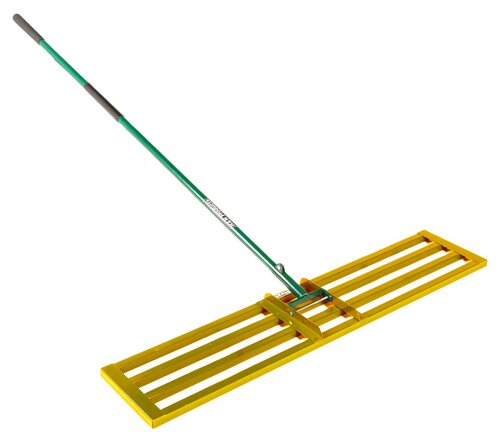
What it is: A large-format leveling rake/lute, bigger and more versatile than the little 30-inch versions sold as “levelawn” tools.
Why it made the list: This is the tool I reach for when I’m working sand into low spots during topdressing. The larger head covers ground faster and gives a flatter pull than the small lutes. Full method in the topdressing and leveling guide.
Who it’s for: Anyone topdressing or leveling low spots by hand rather than renting a machine.
5-in-1 ProPlugger
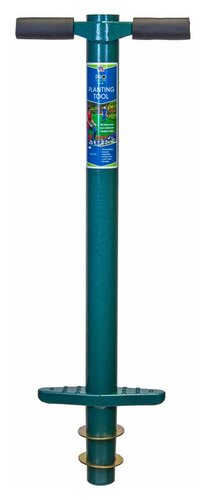
What it is: A Made-in-the-USA plug tool that pulls clean turf plugs and doubles for bulbs and soil samples.
Why it made the list: This is what I use to fill in thin areas from my own turf instead of buying plug trays. Pulling plugs from a healthy, out-of-sight section of your own lawn is the frugal way to patch bare spots without ordering sod or trays online. More in seeding and plugging.
Who it’s for: Anyone patching thin or bare zoysia/bermuda spots who already has enough healthy turf elsewhere on the property to pull from.
AMES Saw-Tooth Border Edger
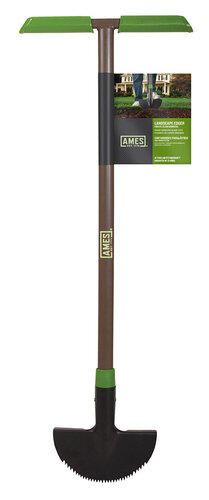
What it is: A manual, saw-toothed bed edger, no gas, no batteries, no cord.
Why it made the list: A roughly $30 manual edger that cuts a clean bed line by hand. For most home lawns, a power edger is overkill for maintaining an existing bed line once or twice a season. The bed edging guide walks through cutting the line and mulching behind it.
Who it’s for: Anyone maintaining bed lines who doesn’t want to buy, store, or maintain a powered edger for a job that takes ten minutes by hand.
Equipment
Echo RB-60: The Spreader
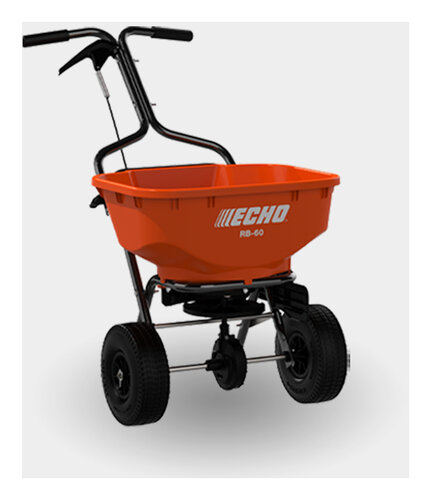
What it is: 60-pound hopper broadcast spreader with 10-inch pneumatic tires, maintenance-free gear case, and factory-calibrated settings. Currently $151.21 at Home Depot.
Why it made the list: This is the spreader I own and the one I recommend. At $151 it lands in the mid-tier sweet spot between the big-box plastic units that hurt results and the $650 Lesco stainless that’s more spreader than any home lawn needs. The factory calibration means the settings on the dial correspond to real spread rates. The 10-inch tires don’t trap fertilizer granules. The hopper holds enough for most home lawns without a refill.
The cheap spreader problem in plain terms: The Scotts EdgeGuard at $50 uses hollow plastic wheels. Those wheels trap granules and deposit them in a concentrated line directly below the spreader with every pass. That’s fertilizer burn in a stripe down your lawn. You’re not saving money; you’re paying $50 to damage turf and waste product.
The Lesco 80 lb stainless ($667) is what every lawn care operator has in the truck. All-stainless, will outlast you if maintained, industry-standard calibration charts on every professional fertilizer bag. If you have a 15,000+ sq ft property and are doing this seriously, it’s justified. For a 5,000–10,000 sq ft home lawn, you’re paying for bragging rights, not better results. Full spreader breakdown, including calibration, in the spreader guide.
Who it’s for: Rationalist and Nut. The Echo is the right answer for serious DIY homeowners.
Field King Professional 190328: The Sprayer
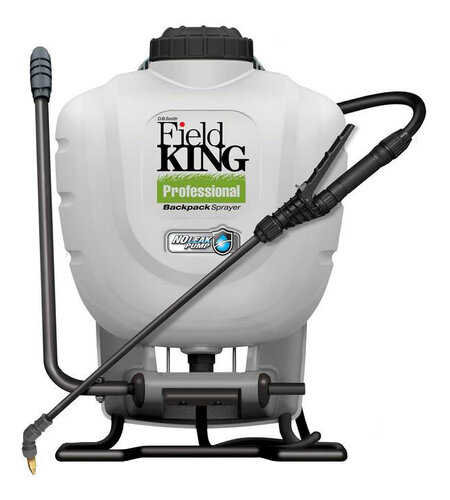
What it is: 4-gallon backpack sprayer with an internal no-leak pump design, the pump lives inside the tank rather than on the back where it drips on your clothes. Currently $89–92 at Home Depot.
Why it made the list: The internal no-leak pump is the key differentiator. Every other pump-type backpack sprayer in this price range will eventually leak down your back. This one doesn’t. The pressure regulator holds a consistent 25 PSI at the nozzle, which matters for consistent herbicide delivery. Inconsistent pressure means inconsistent spray volume per 1,000 square feet, which means inconsistent results.
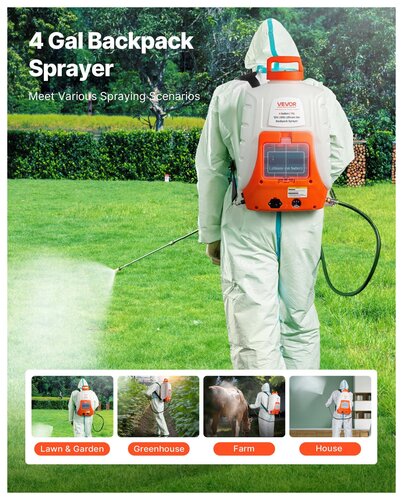
vs. the VEVOR 4-gallon battery backpack sprayer (roughly $91): The VEVOR gives you battery-powered delivery at a consistent flow rate without manual pumping, no pump fatigue, and the last 1,000 sq ft gets the same rate as the first. This is the sprayer that’s actually in my own shed; it’s what makes spraying chemistry feel like less of a chore than pumping a manual tank by hand. The Field King is mechanically simpler with no battery to track. Both are legitimate mid-tier options at nearly the same price. If you spray frequently enough that pumping gets tedious, go VEVOR. If you want simplicity and don’t want to track battery charge, go Field King.
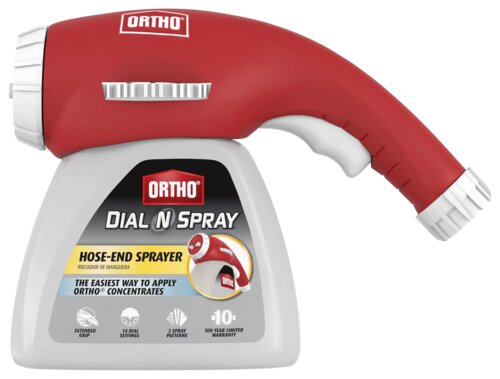
The entry-level option: Ortho Dial N Spray hose-end sprayer (~$16) is fine for small touch-up jobs, liquid iron, kelp, where calibration isn’t critical. It’s not the tool for primary chemistry where rate accuracy matters.
Who it’s for: Any homeowner running a real spray program. The $16 hose-end Ortho sprayer is fine for touch-ups and ready-to-spray concentrates, not for primary chemistry applications.
Sun Joe AJ798E Electric Dethatcher/Scarifier, ~$100–170
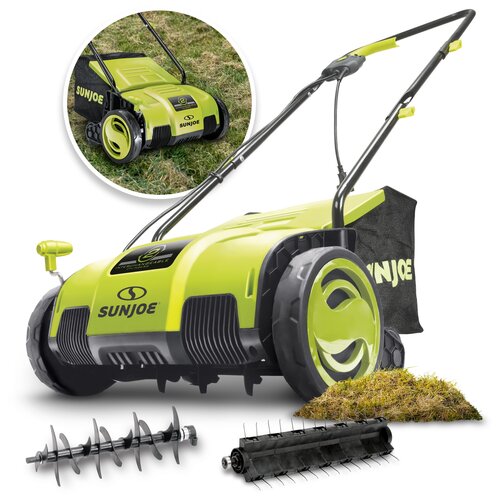
What it is: Convertible electric unit with interchangeable tine and blade cartridges. Handles both dethatching (wire tines) and scarifying (blade cartridge) depending on which head you install.
Why it made the list: For most homeowners, a convertible electric in this price range is the right answer. A professional vertical mower is overkill to own. If a full renovation ever calls for one, rent it.
Two warnings that matter more than the rest of the setup: First, on warm-season grass, use only the blade cartridge. The wire tines rip stolons and damage warm-season turf in ways that take the whole season to recover from, on my own zoysia, only the blade cartridge ever comes out, and only in full active growth. Second, only run this when the lawn is fully active. After complete spring green-up, after you’ve mowed at least twice. Scarifying dormant or transitioning zoysia sets it back weeks, not days. When and how to use it safely is in the dethatching guide.
Who it’s for: Any warm-season homeowner looking to manage thatch without renting equipment. The timing and cartridge discipline aren’t optional.
Soil Testing Tools: Thermometer, pH Pen & 3-in-1 Meter
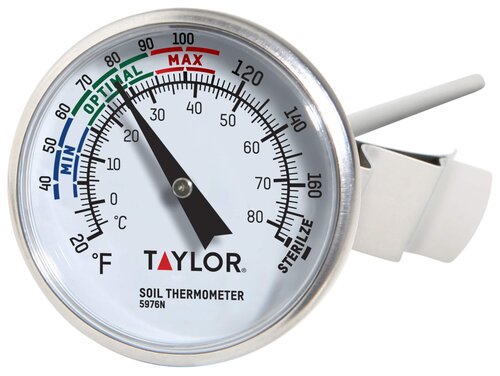
Soil thermometer: the highest ROI tool on the list. A dial-face probe thermometer that reads soil temperature at a 4-inch depth. Around $12–20 for a quality analog unit. Pre-emergent timing, the safe nitrogen window, large patch fungicide timing, overseeding windows, every one of those decisions is soil-temperature-dependent. The thermometer tells you the answer. The calendar gives you a guess. More on timing and why the calendar fails in the Patience article. A $12–15 stainless-steel analog probe or even a $5 cooking thermometer with a long enough probe works fine, this is one of the few categories where the cheapest option is genuinely as good as anything more expensive.
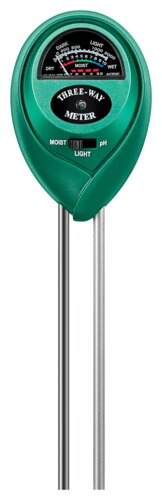
Digital pH pen and a VIVOSUN 3-in-1 meter (moisture/light/pH). Cheap soil tools that keep me honest about what the lawn actually needs before I spend a dime on inputs, and a citric acid solution for knocking down irrigation-water pH before it hits the tank.
Who it’s for: Everyone. If you’re spending money on any product on this list, you need to know when to use it, and a soil test tells you whether you need it at all.
Quick Reference
| Product | Best source | Price | Cost/1k sq ft | Generic? |
|---|---|---|---|---|
| Prodiamine 65 WDG | DoMyOwn | $88.87/5 lb | $0.41 | Yes, IS the generic |
| Dithiopyr 2EW | DoMyOwn | $272.22/gal | $1.56 | Yes, IS the generic |
| Celsius WG | DoMyOwn (10 oz) / Amazon (single-dose packet) | $133.82/10 oz; $16.30/0.226 oz packet on Amazon | $1.54–$3.07 (bottle) | No, brand justified |
| Drive XLR8 | DoMyOwn | $59.98/64 oz | $1.36 | Brand currently cheaper |
| Sertay (sulfosulfuron) | DoMyOwn | $83.69 | varies | Yes, generic of Certainty |
| Recognition + Fusilade II Kit | DoMyOwn | $123.50/kit | project-based | No, only combo that does this job |
| Propiconazole 14.3 (Gunner) | DoMyOwn | $95.53/gal | $0.75–$1.49 | Yes, IS the generic |
| Azoxy 2SC Select (Artavia) | DoMyOwn | $123.75/gal | $0.37–$0.75 | Yes |
| ProStar 70 WG | PeStrong / Seed World | $245–256/3 lb | ~$7.66+ | No, brand justified |
| Scotts DiseaseEx | Home Depot | $21.47/10 lb | $4.29 | Same AI as Heritage G, cheaper |
| Bifen I/T | DoMyOwn | $40.98/qt | $0.65–$1.30 | Yes, IS the generic |
| Acelepryn | DoMyOwn | $72.98/4 oz | $1.66–$6.75 | No, brand justified |
| Dominion 2L | DoMyOwn | $35.76/27.5 oz | ~$0.78 | Yes, IS the generic |
| Taurus SC | DoMyOwn | $48.48/20 oz | varies | Yes, IS the generic |
| Expert Gardener 30-0-4 + 2% Fe | Walmart | ~$20/bag | $1.67/1k sq ft | Shelf fert, Minimalist pick |
| Alaska Morbloom 0-10-10 | Amazon / garden centers | ~$15/qt | one-time | Pre-sod / pre-seed only |
| Urea 46-0-0 | Seven Springs / farm supply / CZ Garden (Amazon B00EME98LM) | $30.40/50 lb | $1.32/lb N | Commodity |
| AMS 21-0-0-24S | Intermountain Turf / Walmart / Easy Peasy (Amazon B0BVNSKBS9) | $31.15/50 lb | $2.97/lb N | Commodity |
| Sulfate of Potash 0-0-50 SOP | Seven Springs | $39.95/50 lb | $1.72/lb K | Commodity |
| Ferrous sulfate 20% | SiteOne / farm supply | ~$35/50 lb | $0.03–$0.05 | Commodity |
| FeATURE 6-0-0 micronutrient | DoMyOwn | $26.17/3 lb | ~$0.87/oz | No, chelated blend, not a commodity |
| T-Nex 1AQ | Amazon | $119.96/gal | $0.22–$0.34 | Yes, IS the generic |
| Atticus Pramaxis MEC (8 oz) | Amazon | $52.99/8 oz | ~$1.66 | Yes, small-format generic |
| DEF (Super Tech) | Walmart | $15.48/2.5 gal | $0.48–$0.68 | Skip BlueDEF |
| Sprayable AMS 21-0-0 | Co-op, or Amazon | $79.99/25 lb | $15.24/lb N | Check a co-op first; Amazon (Greenway Biotech) if none nearby |
| Maxicrop kelp | Seed World | $13.95/qt | $0.25–$0.44 | Yes |
| Kelp4less humic/fulvic/kelp | Kelp4less | varies | No affiliate link | |
| MSO (Southern Ag) | Walmart / Amazon | ~$16–20/qt | ~$0.62 | Generic |
| Spray indicator dye (Lazer Blue) | Agri Supply / Amazon | $10–14/8 oz | <$0.20 | Generic |
| Hi-Yield Spreader Sticker | Amazon / DoMyOwn | ~$15 | Cheap add-on | |
| 48″ double-sided leveling rake | Amazon | ~$40–60 | Equipment | |
| 5-in-1 ProPlugger | Amazon | ~$50 | Equipment | |
| AMES saw-tooth border edger | Amazon | ~$30 | Equipment | |
| Sun Joe dethatcher/scarifier | Various | $100–170 | Blade cartridge only on warm-season | |
| Echo RB-60 | Home Depot | $151 | Equipment | |
| Field King 190328 | Home Depot | ~$90 | Equipment | |
| VEVOR 4-gal battery sprayer | Amazon | ~$91 | Equipment | |
| Ortho Dial N Spray | Amazon / Walmart | ~$16 | Entry-level, touch-ups only | |
| Soil thermometer | Various | $12–20 | Cheap is fine | |
| VIVOSUN 3-in-1 meter / pH pen | Amazon | $10–20 | Cheap is fine |
Prices verified from live retail pages, June 2026. Verify before purchasing, inputs and distributor pricing move. State restrictions on pesticides change, confirm availability in your state before ordering.
Products Mentioned in This Article
- Prodiamine 65 WDG
- Dithiopyr 2EW
- Celsius WG
- Drive XLR8
- Sertay (sulfosulfuron)
- Recognition + Fusilade II Herbicide Kit (bermuda removal from zoysia/St. Augustine)
- Propiconazole 14.3 / Gunner 14.3
- Azoxy 2SC Select / Atticus Artavia 2 SC
- ProStar 70 WG
- Scotts DiseaseEx
- Bifen I/T
- Acelepryn
- Dominion 2L
- Taurus SC
- Ferrous Sulfate (bulk, sprayable grade)
- FeATURE 6-0-0 Chelated Micronutrient Fertilizer
- T-Nex 1AQ
- Atticus Pramaxis MEC 8oz (Trinexapac-Ethyl)
- Sprayable AMS 21-0-0
- Maxicrop Liquid Seaweed
- Kelp4less humic/fulvic/kelp blend, no affiliate link
- Expert Gardener 30-0-4 + 2% Iron, Walmart in-store (no /go/ link needed)
- Alaska Morbloom 0-10-10
- Hi-Yield Spreader Sticker / Monterey Mark-It Blue dye
- 48″ double-sided leveling rake
- 5-in-1 ProPlugger
- AMES saw-tooth border edger
- Sun Joe AJ798E electric dethatcher/scarifier
- Echo RB-60 spreader
- Field King 190328 sprayer
- VEVOR 4-gallon battery backpack sprayer
- Ortho Dial N Spray hose-end sprayer
- VIVOSUN 3-in-1 soil meter / digital pH pen
This site uses affiliate links. They don’t change what I recommend. They keep the lights on here.