Dormant Warm-Season Lawn: What to Do in Winter (and What to Skip)
A dormant warm-season lawn needs very little. Don’t fertilize. Keep the leaves off. Water about an inch if you go three to four weeks with no measurable rain, especially before a hard freeze. Do the soil test now, because lime and sulfur work slowly. The one real winter job is weeds: winter annuals like henbit and chickweed are germinating right now, and the product that fits depends on your grass. Atrazine is for centipede and St. Augustine. Zoysia and bermudagrass get a pre-emergent list instead.
What to buy: a soil test from your extension lab, and only if you grow centipede or St. Augustine, Hi-Yield Atrazine (quart, $22.29 at DoMyOwn). All picks.
Every November the same thing happens. The lawn I spent the summer fussing over turns the color of a paper bag, and a week later the questions start: is it dead, should I be doing something, why is everyone’s neighbor spraying stuff in December? Most of that worry is wasted. A dormant warm-season lawn is asleep, not sick, and the best winter program is mostly short.
Jump to the quick answer. If you want the full year in order, the warm-season Minimalist program, the Rationalist program and the Nut program all pick up where this leaves off.
What Dormancy Actually Is
Clemson’s Home and Garden Information Center puts it plainly: winter dormancy does not mean the turf is dying. The grass is alive underground, and the roots are still taking up water and nutrients for a slow winter metabolism and for storage until spring. Clemson lists St. Augustinegrass, zoysiagrass, centipedegrass, bermudagrass and bahiagrass as the grasses prone to it, and says it commonly begins in November in the Midlands and Upstate of South Carolina, where frosts are frequent. Peachtree City, Georgia, is close to that timing.
That is why winter care is mostly restraint. Top growth has stopped, so fertilizer has nothing to feed.
Do These Things
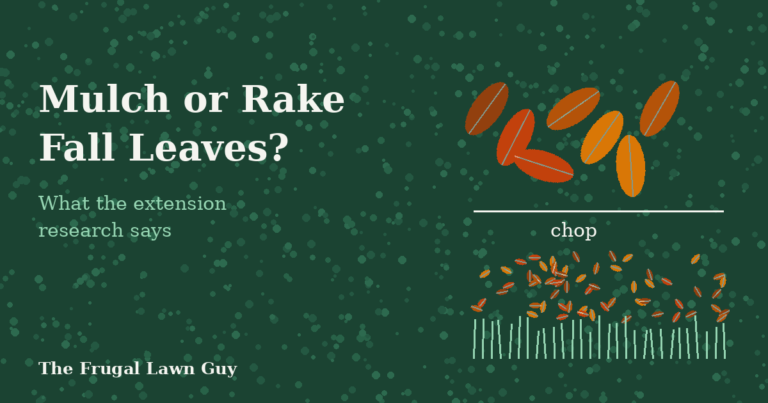
- Keep the leaves off. Clemson’s fall guidance says a lawn covered in fallen leaves can’t produce the carbohydrates it needs for cold tolerance. NC State’s bermudagrass calendar for December through February says to mow to remove leaves and debris, and that clearing them lets the lawn green up earlier and more evenly. For zoysia, the same calendar says mowing isn’t necessary but to pick up rocks, sticks and leaves. I covered the details, including when mulching is fine, in the leaf mulch or rake guide.
- Water if it stays dry. Clemson’s rule for warm-season grasses is 1 inch of water if no rain has fallen within three weeks, applied in the morning once frost is gone and the grass is dry. Its zoysia and centipede calendars use a 3 to 4 week window of no measurable rain, and flag the risky case: warm, bright days followed by a forecast in the low 20s. Moist soil helps keep the growing points warmer and can prevent crown death. The flip side applies to clay. Don’t let it sit saturated all winter.
- Take a soil test. NC State says to submit samples every two to three years, and that lime or sulfur may be needed depending on the results. Clemson says lime or potassium can go on in fall if a soil test says so. Winter is a good time because lime and sulfur react slowly. Zoysia does best at pH 6 to 6.5 and centipede at 5.5 to 6.0, per Clemson, so the right fix depends on which grass you have. Our soil test guide explains the report and the state-by-state lab list points you to your extension lab, which is the cheapest and most credible option.
- Plan the compaction fix for spring. Clemson notes compacted soil lowers cold tolerance, and that core aeration can’t be done at this time of year. Wait until after spring green-up.
Don’t Do These Things
Don’t fertilize. NC State says it flat out for December through February, and Clemson says August 15 is the latest recommended nitrogen date for warm-season lawns in its area because late nitrogen pushes growth you don’t want. Our nitrogen cutoff guide has the dates by region.
The One Real Winter Job: Weeds
Georgia extension agents see the same calls every spring: purple henbit, yellow dandelions, and annual bluegrass seed heads. The Middle Georgia extension office’s winter weed note says these winter annuals are germinating now, and that once they flower they get much harder to control. Fall and early winter is when treatment pays off.
What you use depends on your grass, and this is where people get hurt.
- Zoysia or bermudagrass, pre-emergent route. The Georgia note lists pendimethalin, oryzalin and benefin as products that control annual bluegrass, chickweed and henbit, and says products sold for crabgrass control can control many winter annuals. Dithiopyr controls more species but is harder to find. A second application may be needed for longer control. The timing details are in our fall pre-emergent guide, and Clemson says annual bluegrass seed germinates when soil temperatures drop below 70°F. The annual bluegrass article covers that weed in depth.
- Centipede or St. Augustine, atrazine route. The Georgia note says atrazine controls most annual broadleaf weeds, some perennials and annual bluegrass, with both pre- and post-emergence action. It also warns against over-applying it, because it can damage the desired grass, and against using it over the root zone of trees and shrubs. NC State’s bermudagrass calendar says atrazine or simazine can go on in November or December for annual bluegrass and winter annual broadleaf weeds. Hi-Yield’s label limits its product to St. Augustine and centipede and says no more than two treatments per year.
- Weeds already up and growing. The Georgia note says common 2-way and 3-way broadleaf mixes work well on small broadleaf weeds, but have no residual, so you retreat when more emerge. NC State’s bermudagrass calendar says to apply broadleaf herbicide as needed for chickweed and henbit.
I grow zoysia, so I haven’t run atrazine on my own lawn and none of the sources above list it for zoysia. I’m not recommending it there. I also don’t personally grow bermudagrass, centipede or St. Augustine, so everything in this section is extension guidance and label language, not my own test plot. Read your label and check with your county office before you spray anything in winter.
Do Not Buy
- A “winterizer” fertilizer. Both Clemson and NC State say to skip nitrogen on a dormant warm-season lawn. A bag with “winterizer” on the front is for cool-season grass.
- A topical soil conditioner or growth stimulant. Roots are not growing. A soil test tells you what is missing. A bottle with a leaf on it doesn’t.
- Lawn paint, unless you just want the look. It colors the blades. The extension sources above don’t treat it as part of dormancy care. If you like the green, it’s cosmetic.
Three Ways to Do This
Tier 1: Cost, for the Rationalist. Rake or mow the leaves, water only if it gets dry, and send a soil sample to your extension lab. If you have centipede or St. Augustine and winter weeds, a quart of Hi-Yield Atrazine (4% atrazine) at DoMyOwn is $22.29 this week (regular price $25.26), in stock. DoMyOwn doesn’t ship it to several states, including NY, so check your state. Why this tier: atrazine is the active ingredient, so the generic wins on price and nothing about the brand improves it.
Tier 2: Effort, for the Minimalist. Do the leaf cleanup and the soil test, then do nothing else until spring unless weeds show up in January. If they do, spot treat small broadleaf weeds with a labeled lawn weed killer for your grass type and stop. You skip the pre-emergent decision entirely, which means more spring weeds than a Nut lawn will have, and that’s the trade. For many people it’s worth it.
Tier 3: Goal, for the Nut. Keep a rain gauge, track the three-to-four week dry window, put the lime or sulfur on from your soil test, and run a pre-emergent for winter annuals timed to soil temperature.
Where I Stand
Winter is the cheapest season in the lawn calendar if you let it be. The money goes to a soil test and, maybe, one weed product matched to your grass. Everything else on the shelf this month is aimed at your anxiety, not your turf.
Quick Reference
The short version: clear leaves, water in long dry spells, test the soil, skip fertilizer, and match any weed product to your grass.
- Water: 1 inch if no rain in 3 weeks (Clemson); watch the 3 to 4 week dry spell before a hard freeze.
- Fertilizer: none from December through February (NC State).
- Leaves: off the lawn before spring green-up (Clemson, NC State).
- Soil test: lime or sulfur by results; zoysia pH 6 to 6.5, centipede 5.5 to 6.0 (Clemson).
- Weeds: pre-emergent for zoysia and bermudagrass; atrazine for centipede and St. Augustine; max two atrazine passes per year per the Hi-Yield label.
Do not buy: winterizer fertilizer, stimulant tonics, or a winter package that includes nitrogen.
What to buy:
- Hi-Yield Atrazine Weed Killer, quart (32 oz): DoMyOwn, $22.29 (centipede and St. Augustine only)
Products Mentioned in This Article
- Hi-Yield Atrazine Weed Killer (4% atrazine), quart: DoMyOwn, $22.29, in stock, checked Oct 19, 2026 (no link added yet; not sold in all states)
Sources: Clemson Cooperative Extension HGIC, Winter Irrigation for Turfgrass Lawns and Prepare Warm-Season Lawns for Winter; Clemson HGIC Zoysiagrass and Centipedegrass Yearly Maintenance Programs; NC State Extension, Bermudagrass and Zoysiagrass Lawn Maintenance Calendars; University of Georgia Extension (Middle Georgia), Winter Annual Weed Control, Jan 2025; Hi-Yield Atrazine Weed Killer label as listed at DoMyOwn.
This site uses affiliate links. They don’t change what I recommend. They keep the lights on here.